
Thyme
Thyme
Thymus vulgaris
- Other Botanical Names
- Common thyme; garden thyme.
- Plant Family
- Lamiaceae
- Plant Classification
- Aromatic evergreen shrub
- Ingredient Category
- Herbs
- Native Region
- Southwestern Europe to southeastern Italy.
- Parts Used
- Flowering TopsLeaves
- Common Forms
- Fresh or dried leaves and flowering tops; commercial herbal preparations.
Understanding Thyme
Overview & History
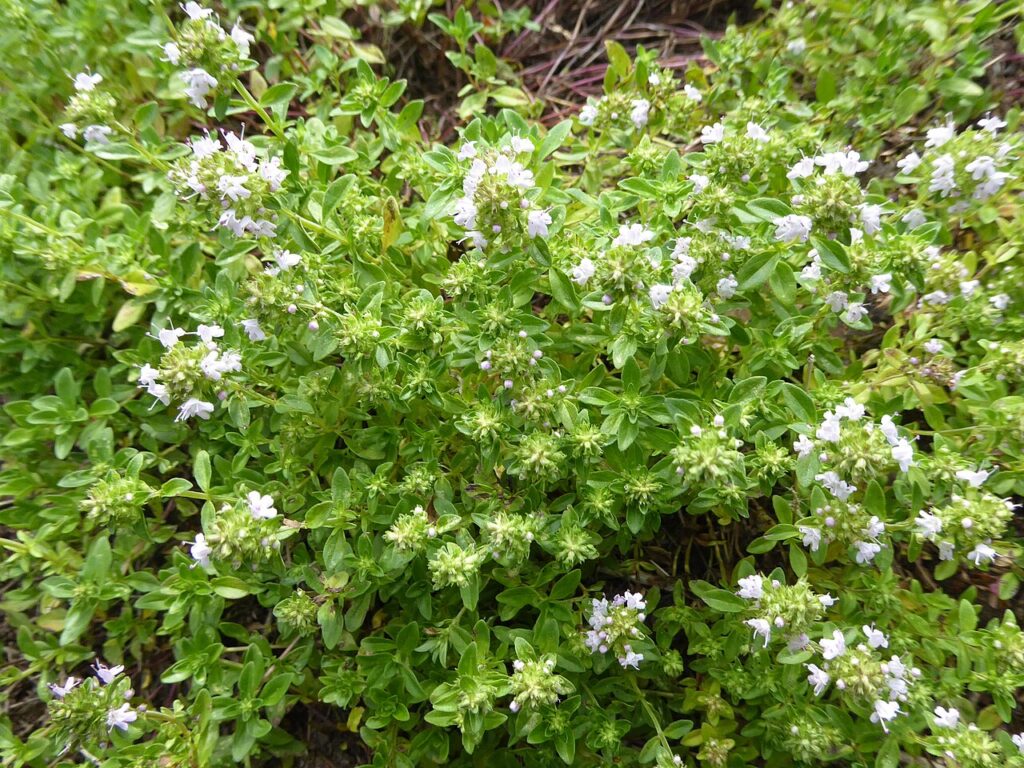
Common thyme is a low aromatic evergreen subshrub with small leaves and pale pink to lilac flowers. It belongs to the mint family but has its own distinctive fragrance and botanical identity. Leaves and flowering tops are the parts most relevant to this reference profile.
Educational reference species or hybrid: Thymus vulgaris. This name defines the educational scope of the profile; it does not scientifically identify the owner’s purchased material. Product-package identity, actual plant part and material grade remain unconfirmed.
Reference photograph of Thyme — Syrio, CC BY-SA 4.0. Resized for display. This reference image does not confirm the identity of the owner’s packet.

Spiritual Associations
Steadiness
Thyme’s small, resilient-looking growth can provide a contemporary symbol of steady attention and patience.
Purpose
A sprig beside a written intention may represent the value of small, consistent actions. This is a modern reflection practice; it is not presented as a documented ancient courage ritual.
Traditional Spiritual Uses
Contemporary reflection — not an attributed historical ceremony
Draw a small flowering shoot and name a consistent action you can take. This is a contemporary patience practice, not a claim that every thyme tradition involved an ancient courage ceremony.
Traditional knowledge
Traditional Medicinal Uses
European herbal monographs recognize a traditional use of thyme herb preparations for productive coughs associated with colds. This recognition rests on long-standing use and does not establish that every homemade thyme preparation has the same effect. Persistent or worsening respiratory symptoms need medical assessment.
Intentional everyday living
Everyday Living
Culinary Uses
Thyme brings an aromatic note to vegetables, soups, and other cooked dishes. Fresh and dried forms differ in strength, so follow a recipe rather than substituting large amounts by eye.
Other Applications
Compare the small thyme leaves with the much larger leaves of some other mint-family herbs. A labeled flowering-shoot image helps connect a dried culinary herb with the plant from which it comes.
Working with Thyme
Common Preparations
Thyme leaf and flowering aerial material appear in food and in specified medicinal products. A culinary herb, a tincture, a standardized preparation and concentrated essential oil are different forms. Follow a verified product’s intended use rather than deriving a general medicinal recipe from the collection packet.
 Culinary Use
 Teas
Safety & Precautions
Thyme preparations can cause stomach upset or allergic reactions, especially in people sensitive to related mint-family plants. Follow the age restrictions and directions of a specific medicinal product; do not turn them into a general dose for children. Ask a clinician about medicinal use during pregnancy, breastfeeding, or alongside treatment. Do not swallow aromatherapy oil.