
Star Anise
Star Anise
Illicium verum
- Other Botanical Names
- Chinese star anise. Not Japanese star anise, Illicium anisatum, or anise, Pimpinella anisum.
- Plant Family
- Schisandraceae
- Plant Classification
- Evergreen tree
- Ingredient Category
- Other
- Native Region
- Southern China and northern Vietnam; long cultivated.
- Parts Used
- Fruits
- Common Forms
- Dried star-shaped fruits and ground culinary spice.
Understanding Star Anise
Overview & History
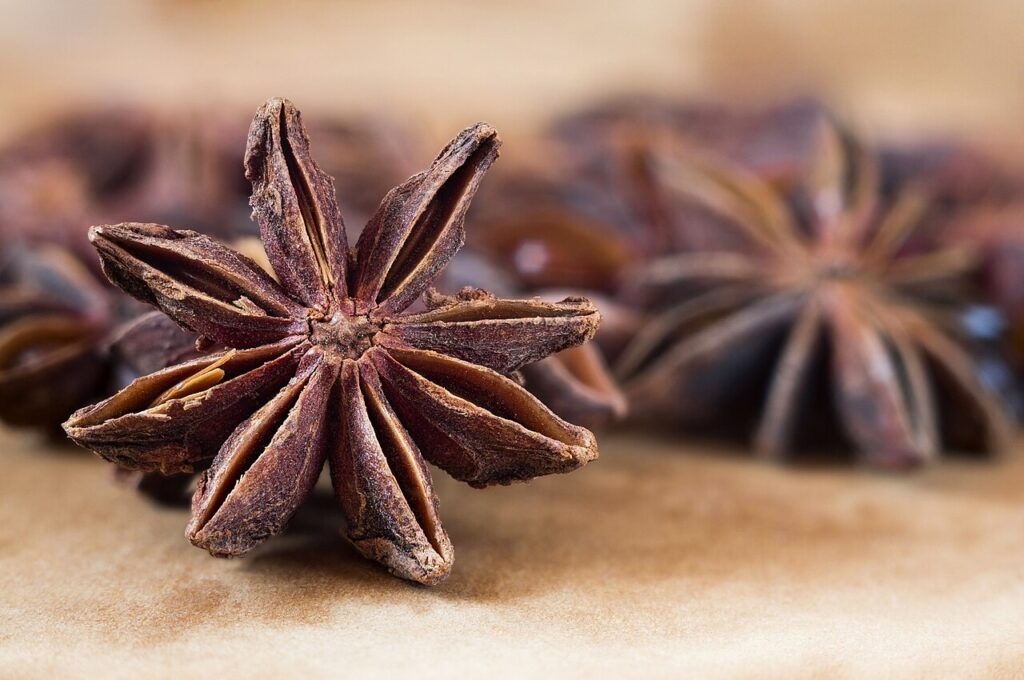
Chinese star anise is an evergreen tree grown for its aromatic, star-shaped fruits. The dried culinary ingredient is a fruit, rather than simply a collection of loose seeds. Its name can be confused with unrelated anise and with toxic Japanese star anise, making reliable identification especially important.
Educational reference species or hybrid: Illicium verum. This name defines the educational scope of the profile; it does not scientifically identify the owner’s purchased material. Product-package identity, actual plant part and material grade remain unconfirmed.
Reference photograph of Star Anise — Retro Lenses, CC BY 4.0. Resized for display. This reference image does not confirm the identity of the owner’s packet.

Spiritual Associations
Focus
In a contemporary personal practice, the star-shaped fruit can serve as a visual point for reflection.
Direction
Its radiating shape may be used as a personal symbol for choosing a direction or gathering scattered thoughts. This interpretation is contemporary, not an asserted ancient ritual.
Traditional Spiritual Uses
Contemporary reflection — not an attributed historical ceremony
Trace the radiating form of a labeled fruit image and name a direction you want to choose. This is contemporary visual reflection rather than an asserted ancient rite or a reason to prepare tea.
Traditional knowledge
Traditional Medicinal Uses
Star anise has a history of use in traditional preparations, but identity and product quality are essential. This profile does not recommend medicinal star-anise tea or a treatment for infant colic. A culinary spice is not a substitute for a prescribed medicine.
Intentional everyday living
Everyday Living
Culinary Uses
Use traceable culinary star anise in a tested recipe, allowing its strong fragrance to complement the dish. Keep its packaging so the botanical and supplier information remain available.
Other Applications
Compare a labeled whole fruit with a botanical illustration rather than identifying star anise from shape alone. Record the supplier’s full name and grade because dangerous look-alikes make provenance important.
Working with Star Anise
Common Preparations
The whole star-shaped spice is a fruit. Only traceable food-grade Chinese star anise should be considered for culinary use; unidentified decorative fruits and star-anise teas for infants are inappropriate substitutes. An extract or oil is not equivalent to a whole fruit in a recipe.
 Culinary Use
Safety & Precautions
Toxic Japanese star anise must not be used as a substitute for Illicium verum. Health authorities have reported serious adverse reactions involving star-anise teas and uncertain identity, including in infants. Do not give star-anise tea as an infant remedy. Buy traceable food-grade material and do not consume unidentified or decorative fruits. Seek urgent medical advice after a suspected toxic exposure.