
Calendula
Calendula
Calendula officinalis
- Other Botanical Names
- Pot marigold; Caltha officinalis (historical synonym).
- Plant Family
- Asteraceae
- Plant Classification
- Annual or biennial herb
- Ingredient Category
- Flowers
- Native Region
- Western Mediterranean (current Kew treatment).
- Parts Used
- Flowers
- Common Forms
- Dried flower heads or separated florets; commercial extracts and infused products.
Understanding Calendula
Overview & History
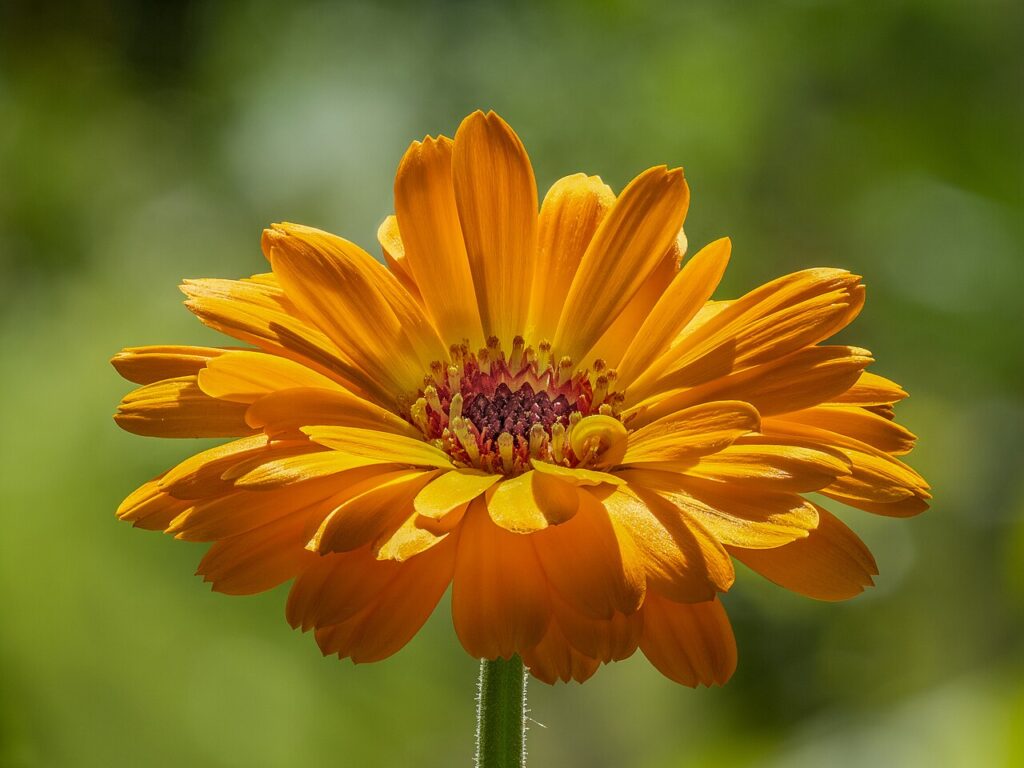
Calendula officinalis is commonly called pot marigold. Its orange or yellow daisy-like heads belong to the aster family; the colored outer structures are ray florets, not a single simple petal arrangement. Calendula and Tagetes marigolds are different genera, so the separate Marigold record should not be merged into this one without reviewing its intended identity.
Educational reference species or hybrid: Calendula officinalis. This name defines the educational scope of the profile; it does not scientifically identify the owner’s purchased material. Product-package identity, actual plant part and material grade remain unconfirmed.
Reference photograph of Calendula — Ermell, CC BY-SA 4.0. Resized for display. This reference image does not confirm the identity of the owner’s packet.

Spiritual Associations
Calendula’s bright flower heads can serve as a contemporary reminder of attentive care. A drawing placed beside a journal is a way to use that symbolism without applying an unverified flower preparation to the body.
Traditional Spiritual Uses
Contemporary reflection — not an attributed historical ceremony
Place a calendula drawing beside a note describing one practical act of care. The exercise is modern and does not involve a skin preparation or a claim about an inherited healing ritual.
Traditional knowledge
Traditional Medicinal Uses
The EMA describes traditional uses of specified Calendula officinalis flower preparations for minor skin inflammation, wounds, and mouth or throat inflammation. Those conclusions rely on traditional use rather than establishing every marketed calendula product as effective. They do not apply automatically to other marigolds or craft-grade flowers.
Intentional everyday living
Everyday Living
Other Applications
A pressed or photographed calendula head can be compared with a Tagetes flower to learn why pot marigold and other marigolds need separate identification. Record whether the purchased material consists of whole heads or separated florets.
Working with Calendula
Common Preparations
Calendula flowers occur as whole dried heads, separated florets and professionally formulated skin products. An infused carrier oil is different from an essential oil or an aqueous preparation. The collection’s flower material is not approved for food, skin use or homemade medicinal products solely by its common name.
Safety & Precautions
Asteraceae allergies are possible; patch test appropriately formulated products. Keep botanical materials, oils and resins away from children and pets; do not ingest or apply unidentified products.