
Turmeric
Turmeric
Curcuma longa
- Other Botanical Names
- Curcuma domestica (historical synonym).
- Plant Family
- Zingiberaceae
- Plant Classification
- Rhizomatous perennial
- Ingredient Category
- Roots
- Native Region
- Cultivated origin in southwestern India (Kew treatment).
- Parts Used
- Rhizomes
- Common Forms
- Fresh or dried rhizomes, sliced material, ground spice and commercial extracts.
Understanding Turmeric
Overview & History
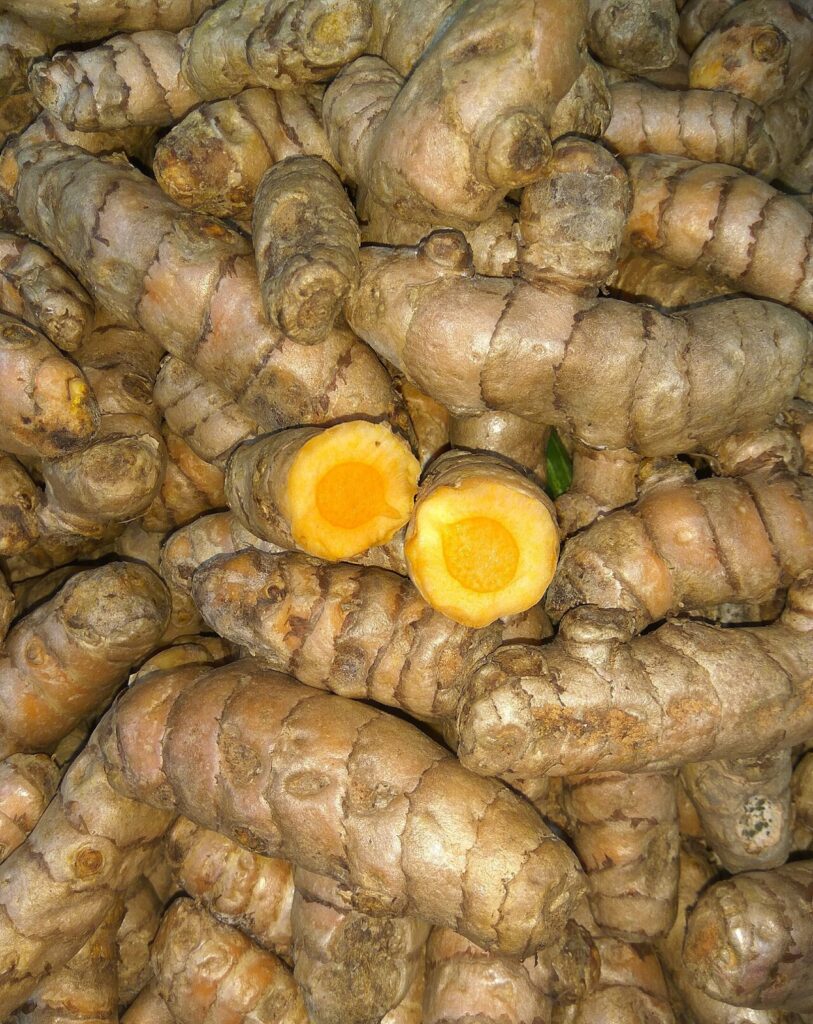
Turmeric, Curcuma longa, is a ginger-family plant whose familiar yellow spice comes from a rhizome, an underground stem. The rhizome’s role in food, coloring and traditional medicine involves different processing and exposure. A culinary powder is not equivalent to an enhanced-absorption curcumin supplement, and the educational name does not verify this packet.
Educational reference species or hybrid: Curcuma longa. This name defines the educational scope of the profile; it does not scientifically identify the owner’s purchased material. Product-package identity, actual plant part and material grade remain unconfirmed.
Reference photograph of Turmeric; the owner’s packet identity and grade are not confirmed. Reference photograph — MattPicks, CC BY-SA 4.0. Resized and converted to JPEG for display; gallery may crop the view. The reference image does not verify the owner’s packet.

Spiritual Associations
NCCIH notes turmeric’s use in some Indian religious ceremonies. That culturally located history should not be collapsed into one universal ritual. A personal reflection using a yellow botanical illustration can be clearly identified as a contemporary adaptation.
Traditional Spiritual Uses
Cultural context and contemporary reflection
Read the source’s specific account of turmeric in some Indian religious contexts before making a personal interpretation. A contemporary yellow botanical drawing can symbolize appreciation without claiming to reproduce a ceremony or requiring a skin preparation.
Traditional knowledge
Traditional Medicinal Uses
Turmeric has documented use in several Asian medical systems. NCCIH reports promising but inconclusive findings for some studied products and warns that formulations differ substantially. This does not establish that turmeric treats every promoted condition or that a culinary packet is a medicinal product.
Intentional everyday living
Everyday Living
Culinary Uses
Separately verified food-grade turmeric may be used as fresh rhizome or powder in cooking. Its strong color can stain work surfaces and fabrics; the craft packet’s food grade remains unconfirmed.
Other Applications
Compare turmeric and ginger in a diagram of underground stems. The comparison explains the library’s practical Roots category while preserving the correct anatomical term, rhizome.
Working with Turmeric
Common Preparations
Turmeric is sold as fresh rhizome, dried slices, powder and concentrated extracts. Treat each as a different product. A collection packet is not assigned a supplement dose, skin mask or medicinal recipe merely because turmeric is familiar in cooking.
Safety & Precautions
Supplemental forms may interact with medicines; stains surfaces. Keep botanical materials, oils and resins away from children and pets; do not ingest or apply unidentified products.
NCCIH reports digestive adverse effects and liver injury associated with some enhanced-absorption curcumin products. Pregnancy and medication use require clinical advice about supplements. Ordinary food use and concentrated extracts need separate consideration; no ingestion or skin use is approved for the collection packet.