
Fenugreek Seed
Fenugreek Seed
Trigonella foenum-graecum
- Other Botanical Names
- Foenum-graecum officinale (historical synonym).
- Plant Family
- Fabaceae
- Plant Classification
- Annual flowering herb
- Ingredient Category
- Seeds
- Native Region
- Iraq to northern Pakistan.
- Parts Used
- Seeds
- Common Forms
- Whole dried seeds, ground seed powder and labeled commercial products.
Understanding Fenugreek Seed
Overview & History
Fenugreek, Trigonella foenum-graecum, is a legume with three-part leaves and pods containing the angular seeds used as a spice. The seed and leafy vegetable forms have different culinary roles. Its long use in food and traditional medicine does not establish that the collection packet is edible or suitable for supplements.
Educational reference species or hybrid: Trigonella foenum-graecum. This name defines the educational scope of the profile; it does not scientifically identify the owner’s purchased material. Product-package identity, actual plant part and material grade remain unconfirmed.
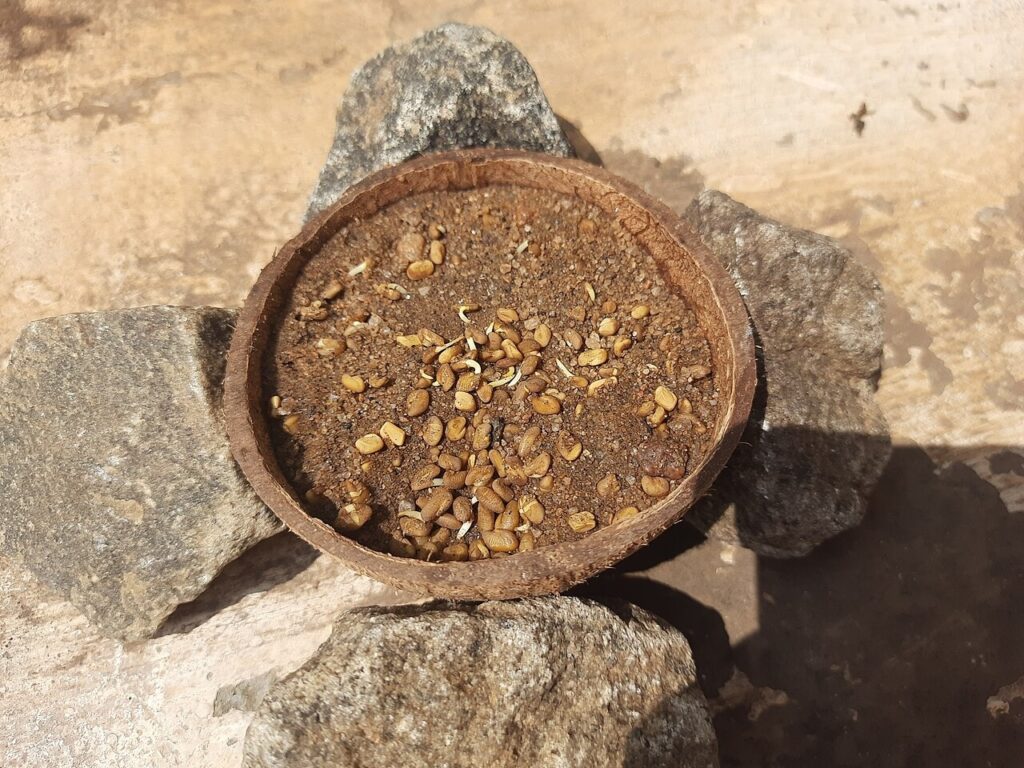
Reference photograph of Fenugreek Seed; the owner’s packet identity and grade are not confirmed. Reference photograph — சந்திரகலா, CC BY-SA 4.0. Resized and converted to JPEG for display; gallery may crop the view. The reference image does not verify the owner’s packet.

Spiritual Associations
Fenugreek can prompt a contemporary reflection on nourishment and the work behind a shared meal. This is a personal practice rather than a promise of abundance or an assigned historical fertility rite.
Traditional Spiritual Uses
Contemporary reflection — not an attributed historical ceremony
Reflect on the work behind a meal beside a labeled seed illustration. This is modern gratitude practice, not a fertility promise or an instruction to use fenugreek during pregnancy or breastfeeding.
Traditional knowledge
Traditional Medicinal Uses
NCCIH records fenugreek’s long history in traditional medicine. Evidence for common modern claims, including increasing milk supply, remains limited or inconsistent. Culinary use and a concentrated medicinal product require separate judgment; this profile does not recommend fenugreek for diabetes, lactation or another condition.
Intentional everyday living
Everyday Living
Culinary Uses
Use only separately verified food-grade fenugreek seed for whole-seed or ground-spice cooking. A culinary reference is not approval of the owner’s packet for eating or medicinal use.
Other Applications
Compare fenugreek’s angular seeds with a drawing of its pod and three-part leaves. Linking the dried spice to the growing plant makes the legume-family reference clearer.
Working with Fenugreek Seed
Common Preparations
Food-grade fenugreek seed is encountered whole or ground in cooking. Leaf products, sprouting seed and concentrated extracts have different sourcing requirements. No lactation preparation, blood-sugar treatment or medicinal dose is assigned to the collection.
Safety & Precautions
May affect blood sugar and interact with medicines; avoid medicinal doses in pregnancy. Keep botanical materials, oils and resins away from children and pets; do not ingest or apply unidentified products.
NCCIH warns that amounts above ordinary food use are unsafe during pregnancy. Larger amounts can cause digestive symptoms, allergic reactions or an excessive fall in blood sugar. Discuss supplements with a clinician, particularly when taking medication; the packet’s food grade has not been established.