
Myrrh
Myrrh
Commiphora spp.
- Other Botanical Names
- Gum myrrh; Balsamodendrum (historical genus synonym).
- Plant Family
- Burseraceae
- Plant Classification
- Tree or shrub
- Ingredient Category
- Resins
- Native Region
- Africa to Sri Lanka; also Mexico and Brazil (Commiphora genus range).
- Parts Used
- Resin
- Common Forms
- Gum-resin tears, lumps or powder, and commercial fragrance extracts.
Understanding Myrrh
Overview & History
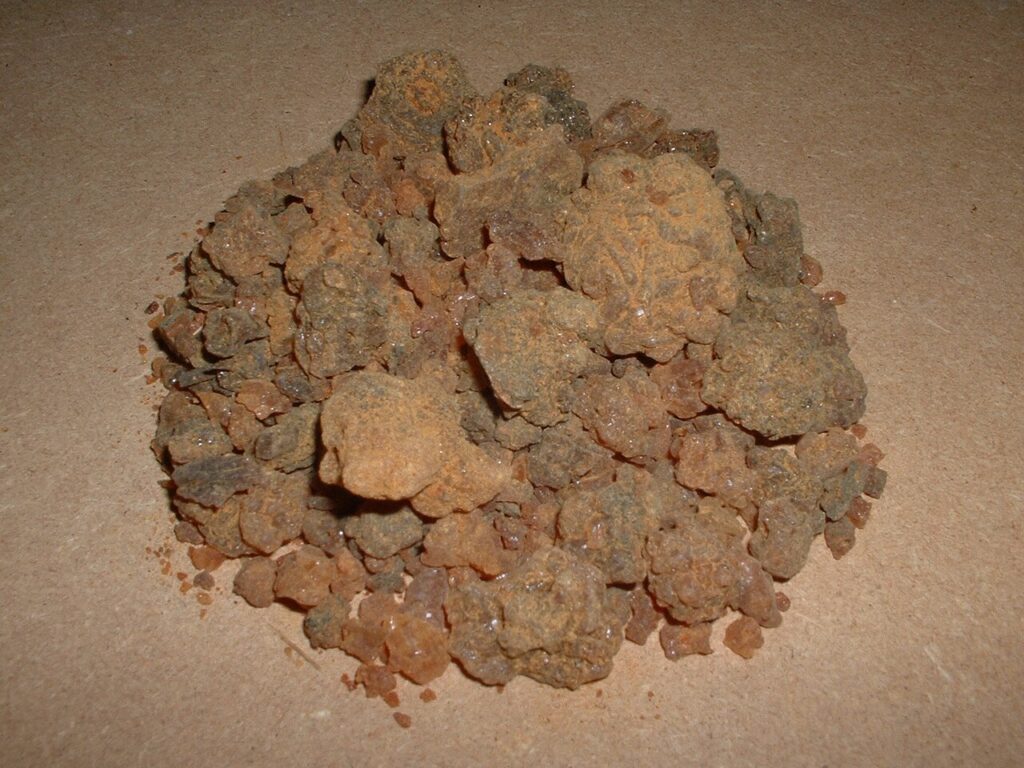
Myrrh is an aromatic resin associated with Commiphora trees, members of the same family as frankincense-producing Boswellia. Several source plants and commercial products need distinction. Resin pieces, powdered material and extracts should not be identified or judged by their common name alone; the educational reference stays at genus level.
Educational reference genus: Commiphora spp.. This name defines the educational scope of the profile; it does not scientifically identify the owner’s purchased material. Product-package identity, actual plant part and material grade remain unconfirmed.
Reference photograph of Myrrh — No machine-readable author provided. Gaius Cornelius assumed (based on copyright claims)., Public domain. Resized for display. This reference image does not confirm the identity of the owner’s packet.

Spiritual Associations
Kew discusses myrrh alongside frankincense in ancient Near Eastern gift and anointing contexts. These are particular historical associations. A contemporary reflection on care or offering can acknowledge that history without claiming to recreate a sacred anointing preparation.
Traditional Spiritual Uses
Cultural context and contemporary reflection
Consider the difference between giving something valuable and claiming power over an outcome, using a myrrh reference card. This contemporary reflection acknowledges the historical gift context without making an anointing oil.
Traditional knowledge
Traditional Medicinal Uses
EMA’s myrrh assessment concerns a defined medicinal source and preparation in traditional oral and skin-use contexts. It should not be read as permission to use any commercial resin on wounds or in the mouth. This genus-level record does not assign a home treatment.
Intentional everyday living
Everyday Living
Other Applications
Compare myrrh and frankincense source labels to learn the distinction between Commiphora and Boswellia. Similar uses in incense do not make the resins chemically or botanically interchangeable.
Working with Myrrh
Common Preparations
Myrrh occurs as dry resin, incense and formulated extracts. A specified medicinal tincture and loose craft-grade tears have different preparation and quality requirements. Keep a labeled dry specimen for study rather than treating the packet as an oral or topical product.
Safety & Precautions
Species vary; avoid ingestion and resin smoke. Keep botanical materials, oils and resins away from children and pets; do not ingest or apply unidentified products.