
Copal
Copal
- Other Botanical Names
- Copalli (resin trade name; botanical source varies).
- Ingredient Category
- Resins
- Parts Used
- Resin
- Common Forms
- Resin tears, lumps, granules and commercial incense blends.
Understanding Copal
Overview & History
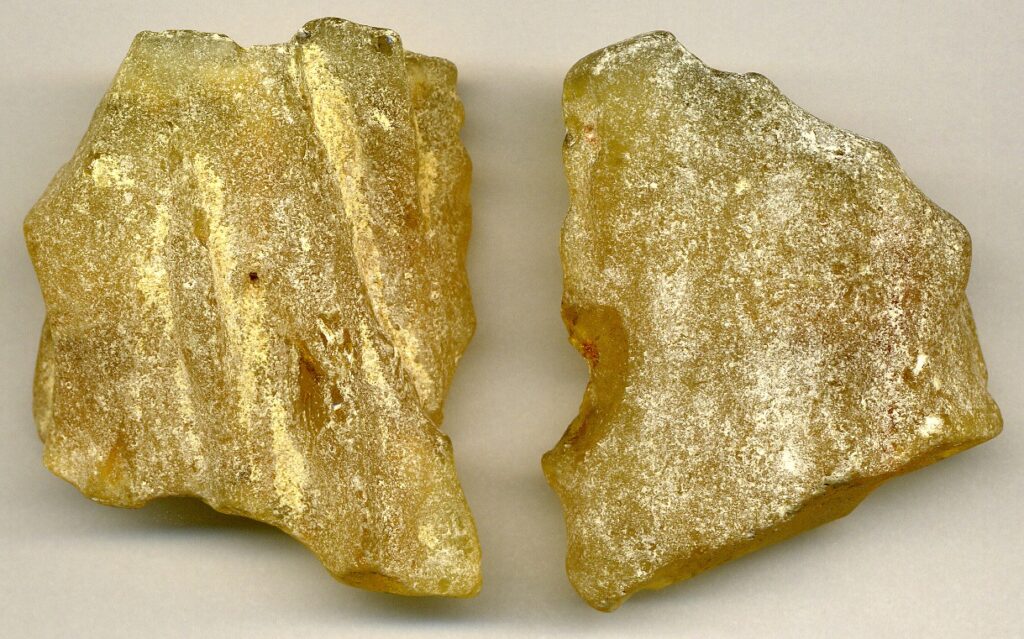
Copal is a trade name for resins from more than one botanical source. A pale or amber-colored lump is not enough to determine its tree or family. Mexican copals include resins discussed by CONABIO under particular Bursera species, while the wider commercial label is broader. Scientific name and family therefore remain unassigned for the purchased material. The name also appears on hardened resin specimens of different ages; the photograph shows raw reference specimens, not a verified incense product from the owner’s collection.
Identification pending. The common label can cover different botanical sources. No exact scientific name is assigned to the purchased material. The reference photograph is illustrative and does not establish identity or grade.
Raw copal reference specimens; botanical source and incense grade are not established for the owner’s material. Reference photograph — James St. John, CC BY 2.0. Resized and converted to JPEG for display; gallery may crop the view. The reference image does not verify the owner’s packet.

Spiritual Associations
CONABIO documents copal offerings in particular pre-Hispanic Mexican archaeological and ceremonial settings. That is a culturally located history, not a universal ritual shared by all resin users. A respectful contemporary reflection can acknowledge the source community without claiming to reproduce its ceremony.
Traditional Spiritual Uses
Cultural context and contemporary reflection
Read CONABIO’s account of particular Mexican copal offerings and note the people and places behind that history. A personal remembrance drawing should be clearly distinguished from reproducing a community’s ceremony.
Traditional knowledge
Traditional Medicinal Uses
CONABIO records incense and traditional medicinal contexts for particular copal-producing plants. Such documentation does not identify this resin or establish modern clinical effectiveness. No treatment, ingestion or skin application is assigned to the unidentified commercial material.
Intentional everyday living
Everyday Living
Other Applications
Record the supplier’s place of origin, processing description and source-tree name alongside a copal specimen. These details are more informative than color alone when comparing different commercial resins.
Working with Copal
Common Preparations
Copal may appear as tears, larger lumps or processed incense blends. An unheated, labeled specimen is suitable for material study. Its ceremonial history does not make burning necessary, and neither a craft resin nor an incense blend is assigned an oral or topical preparation here.
Safety & Precautions
Source species and cultural context vary; avoid inhaling resin smoke. Keep botanical materials, oils and resins away from children and pets; do not ingest or apply unidentified products.