
Frankincense
Frankincense
Boswellia spp.
- Other Botanical Names
- Olibanum (resin trade name).
- Plant Family
- Burseraceae
- Plant Classification
- Tree or shrub
- Ingredient Category
- Resins
- Native Region
- Tropical Africa, Madagascar, Arabian Peninsula and India (Boswellia genus range).
- Parts Used
- Resin
- Common Forms
- Resin tears or granules, powdered resin, essential oils and fragrance extracts.
Understanding Frankincense
Overview & History
Frankincense is an aromatic resin obtained from Boswellia trees. Several species enter trade, so the educational reference is Boswellia spp., not an exact species assigned from a resin’s color or shape. Kew’s Economic Botany Collection documents the material’s history in trade and incense, including particular ancient Near Eastern contexts.
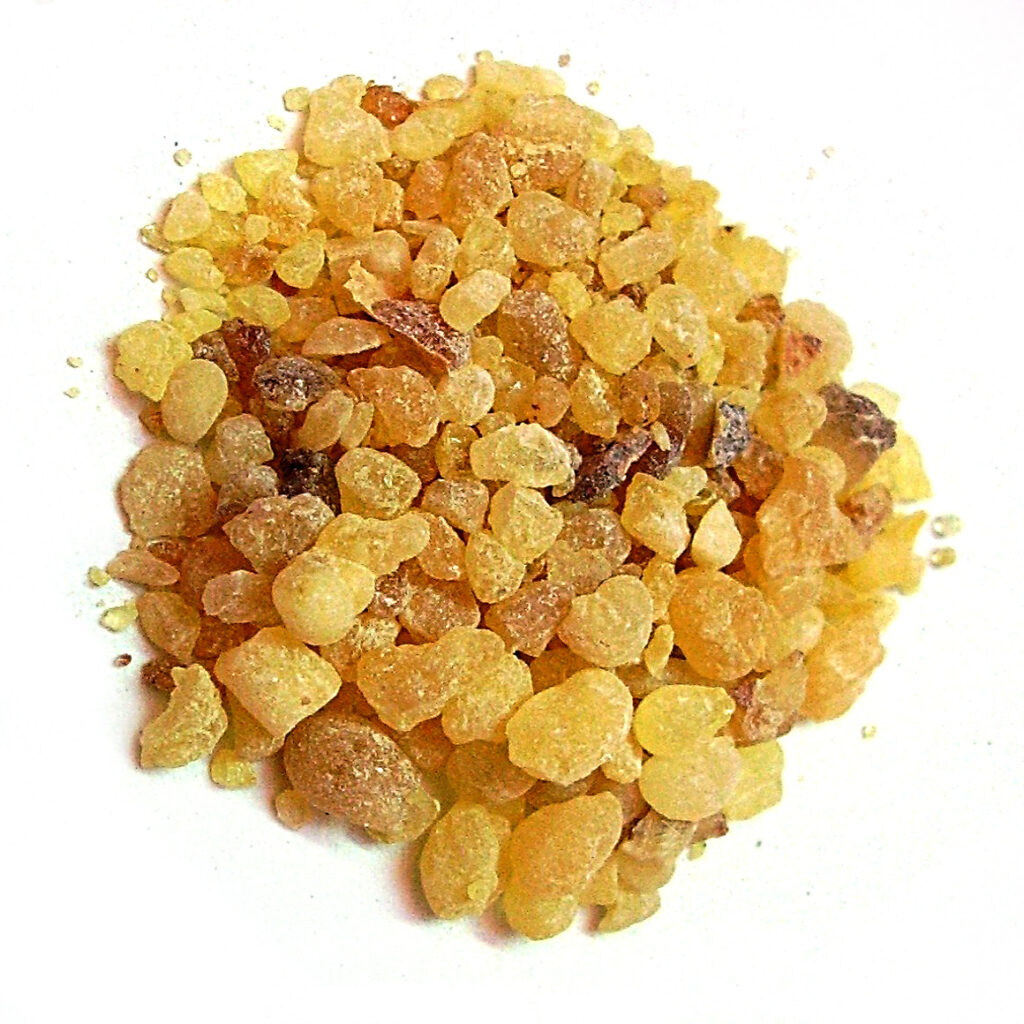
Educational reference genus: Boswellia spp.. This name defines the educational scope of the profile; it does not scientifically identify the owner’s purchased material. Product-package identity, actual plant part and material grade remain unconfirmed.
Reference photograph of Frankincense — Peter Presslein, CC BY-SA 3.0. Resized for display. This reference image does not confirm the identity of the owner’s packet.

Spiritual Associations
Kew discusses frankincense’s place among royal gifts and incense in ancient Near Eastern and biblical contexts. Those are located histories, not proof of a universal cleansing effect. A contemporary reflection can consider the meaning of a gift without burning the collection resin.
Traditional Spiritual Uses
Cultural context and contemporary reflection
Read Kew’s historical account of frankincense gifts and trade, then consider what makes a gift meaningful to you. The contemporary reflection does not require incense burning or claim to reproduce a sacred service.
Traditional knowledge
Traditional Medicinal Uses
NCCIH discusses Boswellia serrata in Ayurvedic practice and modern extract studies, while noting that high-quality evidence is insufficient for firm conclusions. An extract from a named species is not the same as an unidentified frankincense tear. This genus-level entry does not assign a medicinal dose.
Intentional everyday living
Everyday Living
Other Applications
Compare the supplier’s description of frankincense with Myrrh and Benzoin. Record the source species if supplied, the product form and any added fragrance instead of identifying the resin solely by appearance.
Working with Frankincense
Common Preparations
Whole resin tears, powdered incense, essential oil and standardized extracts are different products. Keep an unheated labeled specimen for study. Neither the incense tradition nor a supplement study is a reason to swallow the craft resin or make a topical product from it.
Safety & Precautions
Different Boswellia species exist; smoke may irritate lungs. Keep botanical materials, oils and resins away from children and pets; do not ingest or apply unidentified products.