
Garlic
Garlic
Allium sativum
- Other Botanical Names
- Allium longicuspis (historical synonym).
- Plant Family
- Amaryllidaceae
- Plant Classification
- Bulbous perennial
- Ingredient Category
- Herbs
- Native Region
- Central Asia to northeastern Iran.
- Parts Used
- Bulb
- Common Forms
- Fresh bulbs and cloves, dried or powdered culinary garlic, and separately manufactured supplements.
Understanding Garlic
Overview & History
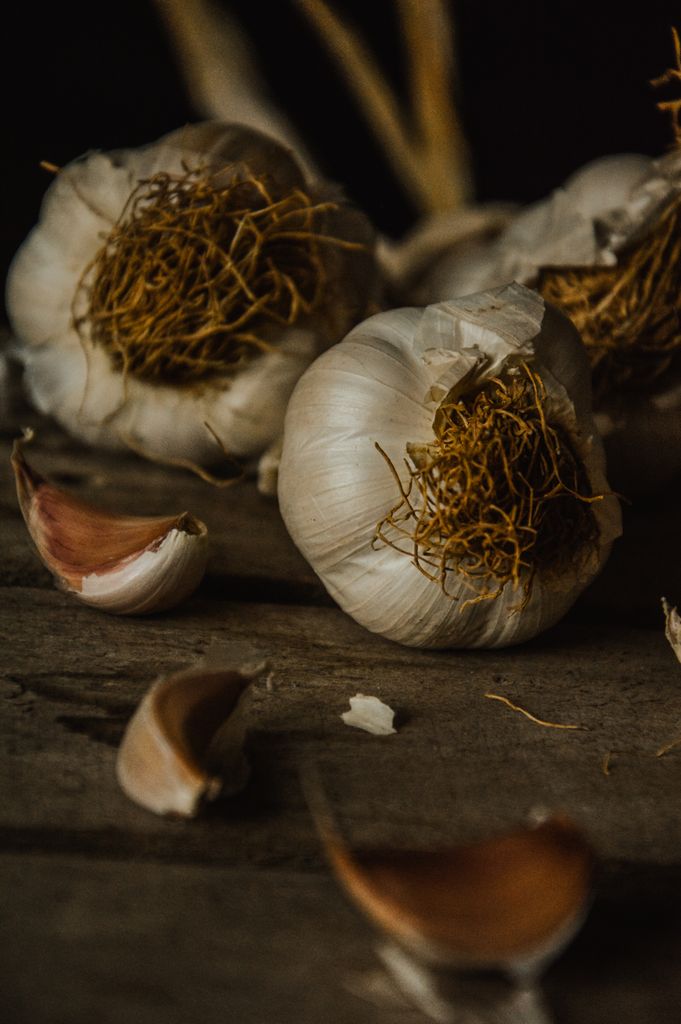
Garlic (<em>Allium sativum</em>) is a bulb-forming perennial in the amaryllis family. Kew records its native range as Central Asia to northeastern Iran. Its divided bulb is widely used as a food seasoning.
Educational reference species or hybrid: Allium sativum. This name defines the educational scope of the profile; it does not scientifically identify the owner’s purchased material. Product-package identity, actual plant part and material grade remain unconfirmed.
Spiritual Associations
Protection
Garlic has a documented place in protective folklore in parts of Europe and the Mediterranean. Accounts include bulbs or cloves used as amulets and placed near entrances. These are particular folk traditions, not a single practice shared by every community.
Purification and strength
In a contemporary personal practice, garlic may represent a boundary, a sense of resolve, or a renewed intention to care for the home. These broader meanings are offered as modern interpretations.
Traditional Spiritual Uses
Contemporary reflection — not an attributed historical ceremony
Name a boundary you want to care for beside a garlic-bulb drawing. This is a contemporary adaptation of protective symbolism, not evidence that the drawing or the unverified cloves physically protect a home.
Traditional knowledge
Traditional Medicinal Uses
Garlic has a long history of medicinal use. Modern supplement studies do not establish a general ability to prevent disease. NCCIH reports small potential effects on some cardiovascular risk factors, while evidence for preventing or treating colds remains insufficient. Culinary use and concentrated supplements should be considered separately.
Intentional everyday living
Everyday Living
Culinary Uses
Fresh cloves bring a strong, familiar flavor to cooked dishes. Chopping, crushing, and roasting create different culinary experiences. Use tested food-safety instructions when preserving garlic, especially in oil; this profile provides no shelf-stable garlic-in-oil recipe.
Other Applications
Use a labeled bulb illustration to distinguish an individual garlic clove from the whole bulb. The comparison also separates the garlic clove from the unrelated spice called cloves.
Working with Garlic
Common Preparations
Garlic bulbs, individual cloves, powders, extracts and oil products are different preparations. Verified culinary garlic is a food ingredient; a concentrated supplement has its own precautions. Do not use raw garlic as a skin poultice or infer a medicinal dose from a kitchen preparation.
 Culinary Use
Safety & Precautions
Garlic can cause digestive upset or allergic reactions. Raw garlic applied to skin can cause severe irritation and chemical burns. Garlic supplements can increase bleeding risk, particularly around surgery or when taken with anticoagulants or aspirin. Discuss supplements and possible interactions with a health professional. Safety of amounts above food levels during pregnancy or breastfeeding is uncertain.