
Hawthorn
Hawthorn
Crataegus spp.
- Plant Family
- Rosaceae
- Plant Classification
- Tree or shrub
- Ingredient Category
- Fruits
- Native Region
- Temperate Northern Hemisphere to Central America (genus range).
- Parts Used
- FlowersFruitsLeaves
- Common Forms
- Dried flowering leaf material, fruits and separately labeled extracts.
Understanding Hawthorn
Overview & History
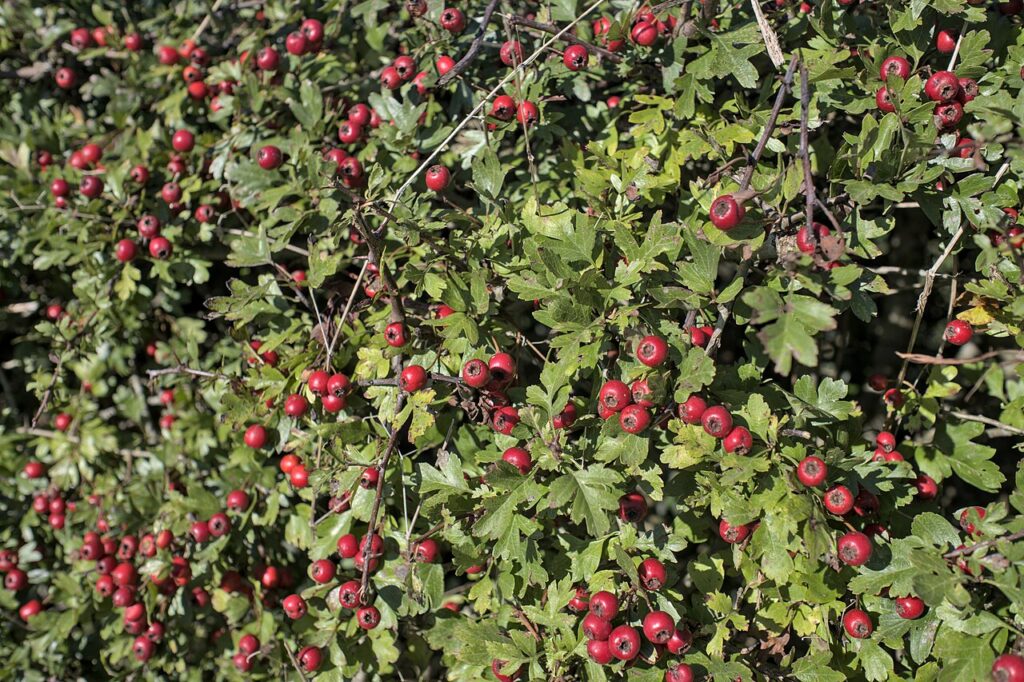
Hawthorns are flowering shrubs or trees in Crataegus, a genus in the rose family. Their fruits are often called haws, but leaves, flowers and roots are separate materials with different references. The collection’s Fruits classification does not identify a species, and the educational scope remains at genus level.
Educational reference genus: Crataegus spp.. This name defines the educational scope of the profile; it does not scientifically identify the owner’s purchased material. Product-package identity, actual plant part and material grade remain unconfirmed.
Reference photograph of Hawthorn — Bob Harvey, CC BY-SA 2.0. Resized for display. This reference image does not confirm the identity of the owner’s packet.

Spiritual Associations
The branching form of a hawthorn can be a contemporary image for the boundaries and connections of a home. This personal interpretation does not prescribe a culture’s thorn-tree ceremony or establish a protective effect.
Traditional Spiritual Uses
Contemporary reflection — not an attributed historical ceremony
Draw a branching boundary around a word representing home, leaving openings for valued connections. This contemporary hawthorn-inspired exercise is not a borrowed thorn-tree ceremony or a cardiac remedy.
Traditional knowledge
Traditional Medicinal Uses
NCCIH describes traditional hawthorn use for cardiovascular and digestive concerns, but clinical evidence is limited or conflicting. Material part and species matter. This profile does not recommend hawthorn for heart symptoms or substitute it for prescribed care.
Intentional everyday living
Everyday Living
Other Applications
Build a plant-part record showing a hawthorn flowering branch and fruit. It helps prevent the broad name hawthorn from collapsing several very different ingredients into one use category.
Working with Hawthorn
Common Preparations
Hawthorn may be supplied as fruit, leaf with flower, or a formulated extract. Record the actual part and species before considering any preparation. A fruit packet is not interchangeable with a root supplement or a medicinal leaf-and-flower product.
Safety & Precautions
Can interact with heart medicines; medical use needs professional oversight. Keep botanical materials, oils and resins away from children and pets; do not ingest or apply unidentified products.
Hawthorn products may interact with medicines and have caused adverse effects. NCCIH also reports serious adulteration problems in some products sold as tejocote root; that warning concerns particular root supplements, not proof that this fruit packet is adulterated. Discuss medicinal use with a clinician rather than treating cardiac symptoms yourself.