
Hyssop
Hyssop
Dracocephalum officinale
- Other Botanical Names
- Hyssopus officinalis L. — widely used synonym of the educational reference; not an identification of the purchased packet.
- Plant Family
- Lamiaceae
- Plant Classification
- Subshrub
- Ingredient Category
- Herbs
- Native Region
- Europe and the Mediterranean region to Iran.
- Parts Used
- Flowering TopsLeaves
- Common Forms
- Fresh or dried flowering herb, cut leaves and commercial extracts or oils.
Understanding Hyssop
Overview & History
True hyssop is a mint-family subshrub with narrow leaves and spikes of flowers. Kew accepts Dracocephalum officinale for the educational species widely known as Hyssopus officinalis. It is distinct from plants called anise hyssop in Agastache. Historical references to a plant translated as hyssop should not automatically be treated as botanical identification of this modern species.
Educational reference species or hybrid: Dracocephalum officinale. This name defines the educational scope of the profile; it does not scientifically identify the owner’s purchased material. Product-package identity, actual plant part and material grade remain unconfirmed.
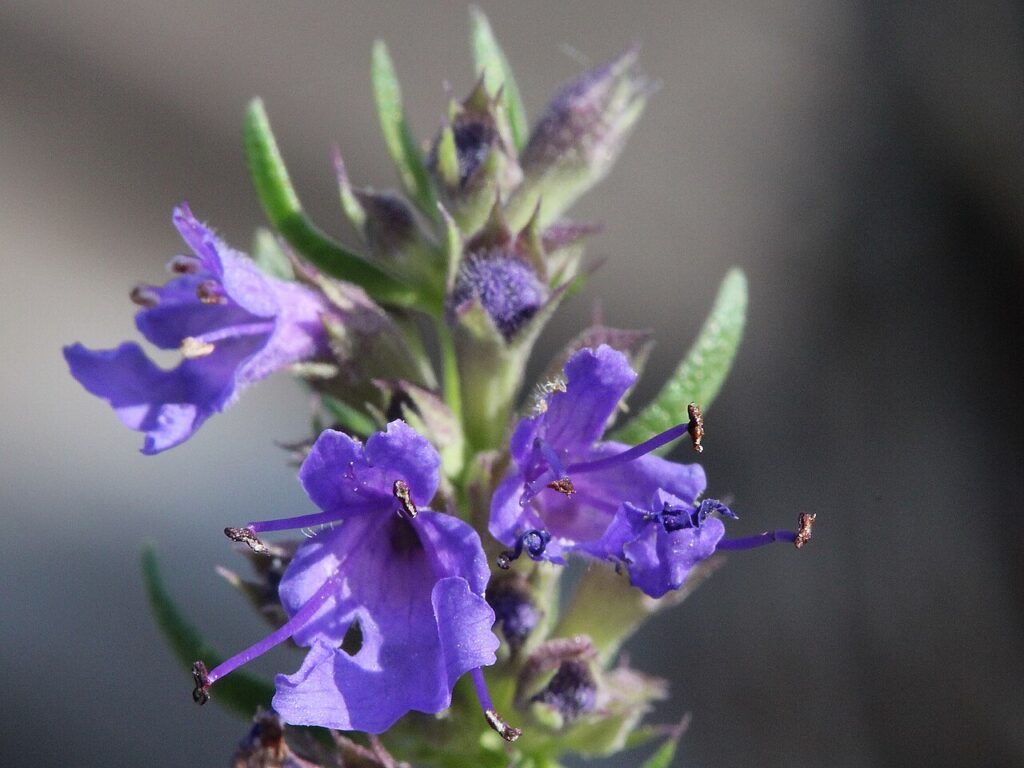
Reference photograph of Hyssop — Holger Casselmann, CC BY-SA 3.0. Resized for display. This reference image does not confirm the identity of the owner’s packet.

Spiritual Associations
Hyssop may be used as a contemporary symbol for beginning again with clear intentions. That is a personal interpretation, not proof that this species was the plant in a particular biblical passage or historical cleansing ceremony.
Traditional Spiritual Uses
Contemporary reflection — not an attributed historical ceremony
Write an intention for a fresh beginning beside the accepted-name reference card. This is contemporary reflection; a biblical translation containing the word hyssop does not identify this species or prescribe a cleansing preparation.
Traditional knowledge
Traditional Medicinal Uses
This profile does not transfer traditional-use claims between true hyssop and anise hyssop. Nor does it treat the common name in an ancient text as a species-specific medical record. No home treatment, oil use or medicinal dose is assigned to the purchased material.
Intentional everyday living
Everyday Living
Other Applications
Compare the narrow leaves of a true-hyssop illustration with the broader leaves of anise hyssop. Keeping the names separate is a useful everyday identification exercise for a home botanical library.
Working with Hyssop
Common Preparations
Hyssop may be sold as dried leafy flowering material or as a concentrated oil. Those forms are not interchangeable. Keep a botanical specimen labeled with both the accepted name and familiar synonym, and do not infer an edible or medicinal grade from a craft label.
Safety & Precautions
Confirm species; essential oil can pose serious risks. Keep botanical materials, oils and resins away from children and pets; do not ingest or apply unidentified products.