
Licorice Root
Licorice Root
Glycyrrhiza spp.
- Other Botanical Names
- Liquorice (alternative spelling).
- Plant Family
- Fabaceae
- Plant Classification
- Herbaceous perennial
- Ingredient Category
- Roots
- Native Region
- Mediterranean to Mongolia; parts of Australia and the Americas (genus range).
- Parts Used
- Roots
- Common Forms
- Cut dried roots, root powder and species-labeled extracts.
Understanding Licorice Root
Overview & History
Licorice roots are obtained from Glycyrrhiza plants in the legume family. Several species enter medicinal and food trade, so the educational reference stays at genus level. NCCIH also notes that some products with a licorice-like flavor use anise instead of actual licorice; a flavor name is not a botanical identification.
Educational reference genus: Glycyrrhiza spp.. This name defines the educational scope of the profile; it does not scientifically identify the owner’s purchased material. Product-package identity, actual plant part and material grade remain unconfirmed.
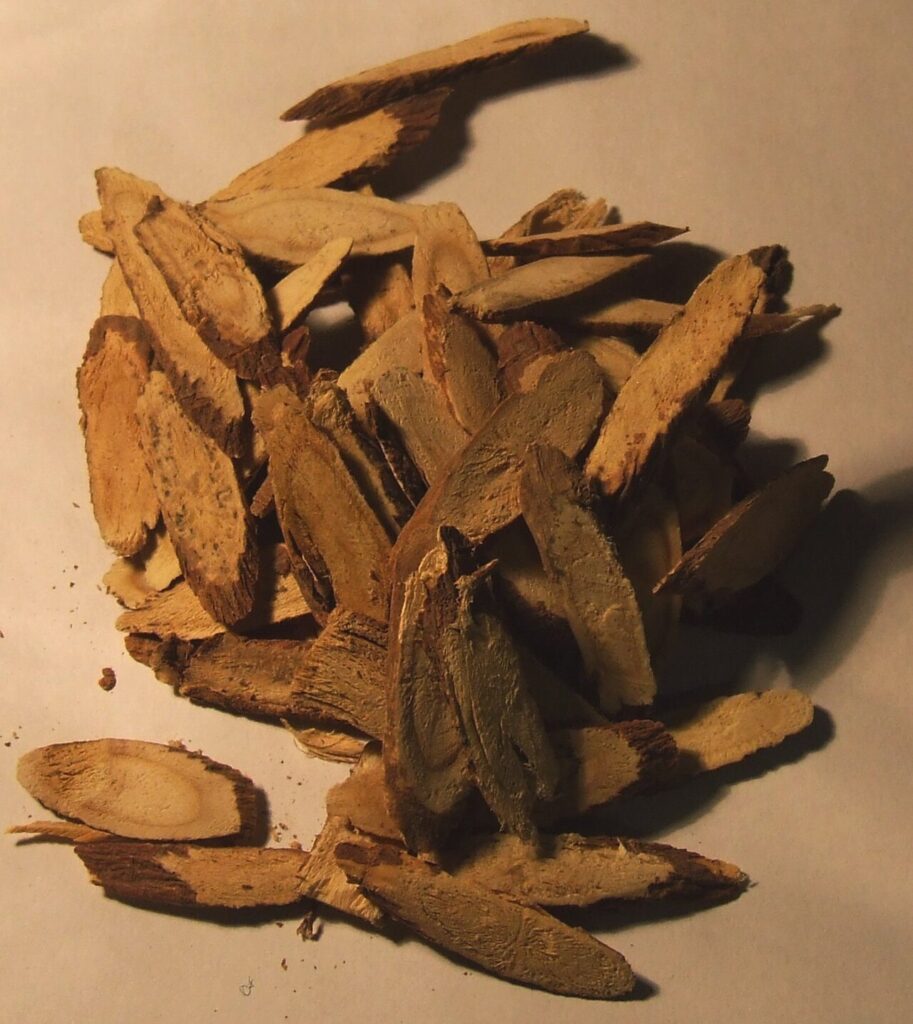
Reference photograph of Licorice Root — Erin Silversmith, CC BY-SA 4.0. Resized for display. This reference image does not confirm the identity of the owner’s packet.

Spiritual Associations
A licorice-root illustration can prompt a contemporary reflection on the difference between a pleasant first impression and careful understanding. This is personal symbolism and does not attribute a universal sweetness or persuasion ritual to the plant.
Traditional Spiritual Uses
Contemporary reflection — not an attributed historical ceremony
Reflect on the difference between a pleasant impression and careful understanding beside a licorice reference. This is modern symbolism, not a traditional persuasion practice or a reason to ingest root.
Traditional knowledge
Traditional Medicinal Uses
NCCIH describes licorice’s use in several historical medical systems for respiratory and other complaints, while finding insufficient high-quality evidence for broad health claims. A traditional history does not justify medicinal use of unidentified root or make different Glycyrrhiza preparations equivalent.
Intentional everyday living
Everyday Living
Other Applications
Keep the supplier’s species and extract description with any licorice reference. Comparing an actual-root label with an anise-flavored product illustrates why a familiar taste cannot establish botanical identity.
Working with Licorice Root
Common Preparations
Licorice is sold as cut root, powder, extracts and formulated products, including forms with glycyrrhizin removed. These products are not interchangeable. No root decoction, supplement dose or topical recipe is assigned to the collection packet.
Safety & Precautions
Can raise blood pressure and lower potassium; avoid self-medicating. Keep botanical materials, oils and resins away from children and pets; do not ingest or apply unidentified products.
Glycyrrhizin in licorice can cause serious heart and blood-pressure problems, particularly with larger or prolonged exposure and in people with hypertension, heart or kidney conditions. Medication interactions occur. Do not use this unverified root as medicine; seek clinical advice for supplement use, including during pregnancy or breastfeeding.