
Mustard Seed
Mustard Seed
- Plant Family
- Brassicaceae
- Ingredient Category
- Seeds
- Parts Used
- Seeds
- Common Forms
- Whole seeds, ground powder and prepared condiments; white, brown and black types differ.
Understanding Mustard Seed
Overview & History
Mustard seed can come from plants in Brassica or Sinapis, within the cabbage family. White, brown and black mustard are not simply different colors of one verified species. The common name supports a broad family reference but not a single genus or species for the owner’s packet; the active scientific-name field remains blank.
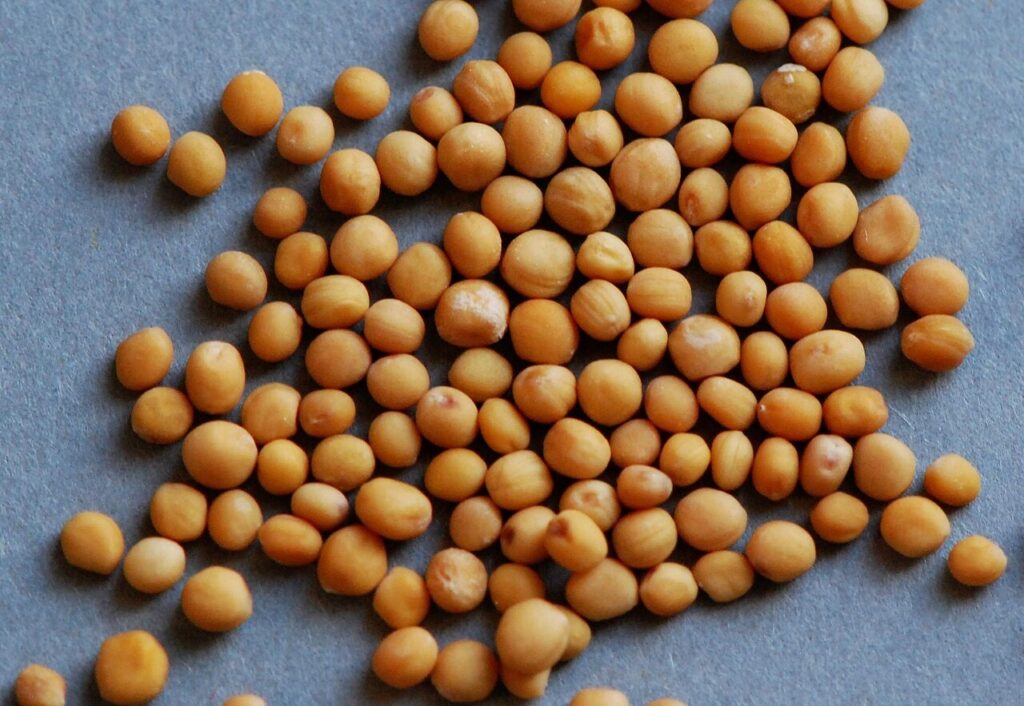
Identification pending. The common label can cover different botanical sources. No exact scientific name is assigned to the purchased material. The reference photograph is illustrative and does not establish identity or grade.
Sinapis alba seeds illustrate one mustard source; the owner’s seed species is unconfirmed. Reference photograph — Pancrat, CC BY-SA 3.0. Resized and converted to JPEG for display; gallery may crop the view. The reference image does not verify the owner’s packet.

Spiritual Associations
The mustard-seed parable in Mark 4 uses the contrast between a small seed and later growth in a Christian teaching. This is a particular textual tradition, not evidence for a botanical species or proof that carrying seeds produces a spiritual result.
Traditional Spiritual Uses
Cultural context and contemporary reflection
Read the mustard-seed parable in Mark 4 in its Christian textual context. A contemporary reflection on small beginnings can draw on that story without claiming a species identification or a guaranteed spiritual result.
Traditional knowledge
Traditional Medicinal Uses
A familiar condiment and a historical mustard poultice are different exposures. Because the source and grade are unsettled, this profile does not prescribe skin applications or medicinal use. The seed’s place in a parable does not establish a health benefit.
Intentional everyday living
Everyday Living
Other Applications
Compare supplier labels for different culinary mustards and record their named source plants. A seed-color comparison alone should not be used as a botanical identification test.
Working with Mustard Seed
Common Preparations
Mustard is sold as whole seeds, ground powder and prepared condiments. Those food products differ from a craft packet or a concentrated extract. No mustard plaster, skin poultice or medicinal dose is assigned to this collection.
Safety & Precautions
Mustard is a significant food allergen. Keep botanical materials, oils and resins away from children and pets; do not ingest or apply unidentified products.