Cleansing & Protection
Smoke Cleansing: Herbs, History & Intentions
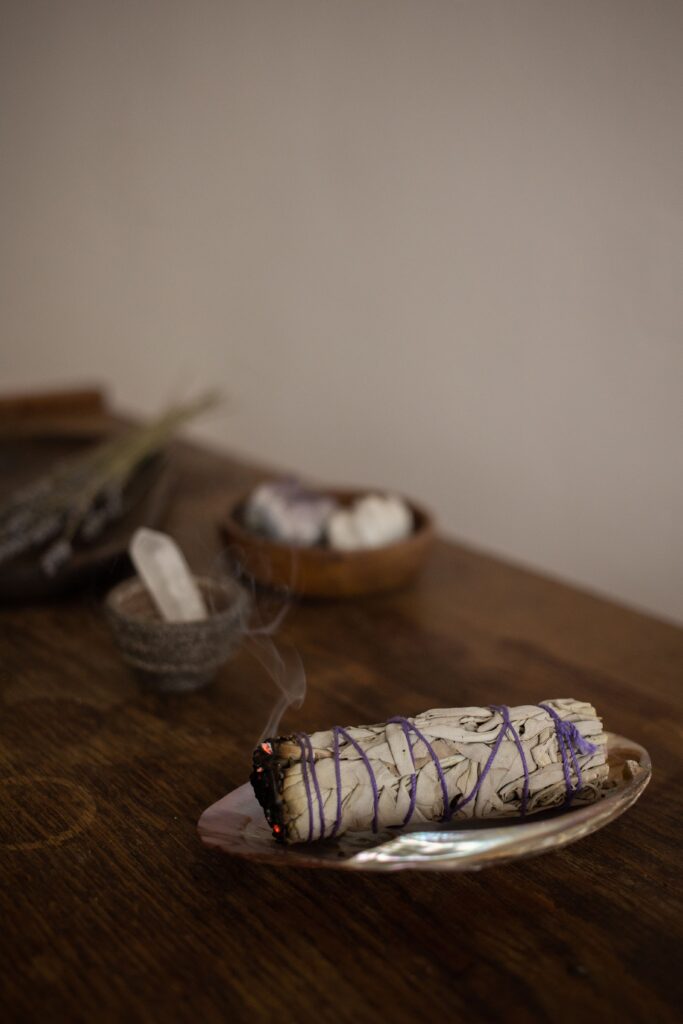
Have you ever walked into a room and felt like the atmosphere needed a little refreshing?
Maybe you’ve had a stressful week, experienced tension in your home, or simply want to create a peaceful environment.
For centuries, people around the world have incorporated smoke into spiritual ceremonies, prayer, purification, and personal reflection.
From burning incense to using fragrant herbs, smoke has carried different meanings across cultures and traditions.
But here’s something important to understand: There isn’t just one way to practice smoke cleansing.
Different traditions have their own beliefs, methods, and purposes. This article offers a simple introduction to a few commonly used herbs and practices, rather than a complete guide to any particular tradition.
Let’s explore some of them.
What Is Smoke Cleansing?
Smoke cleansing is a broad term for practices that involve burning herbs, incense, or other aromatic materials with a particular intention.
Depending on the tradition, smoke may symbolize purification, protection, prayer, blessing, or releasing unwanted influences.
Some people move through their homes with incense or herbs while speaking affirmations. Others incorporate smoke into religious ceremonies or moments of meditation.
And some simply enjoy using incense to create a calm atmosphere.
The purpose doesn’t have to be complicated.
For some, it’s about connecting with their spiritual beliefs. For others, it’s about creating a meaningful moment to reset and reflect.
Is Smoke Cleansing the Same as Smudging?
You may have heard the term smudging used interchangeably with smoke cleansing.
While the practices can look similar, they aren’t always the same thing.
Smudging is an important ceremonial practice within various Indigenous North American traditions. Depending on the community, it may involve sacred plants such as sage, cedar, sweetgrass, or tobacco.
These ceremonies can carry specific teachings, prayers, and cultural meanings.
Not every Indigenous community practices smudging in the same way, and not every smoke cleansing practice should automatically be called smudging.
For this article, we’ll primarily use the broader term smoke cleansing while respecting the distinct traditions associated with smudging.
Three Common Choices for Smoke Cleansing
There are many herbs and aromatic materials used in spiritual practices, but let’s focus on three familiar options: incense, rosemary, and sage.
1. Incense: Creating an Intentional Atmosphere
Incense has been used for centuries in religious ceremonies, temples, homes, and personal spiritual practices.
Depending on the tradition, burning incense may represent prayer, spiritual connection, purification, or an offering.
Today, incense is available in several forms, including sticks, cones, and loose aromatic materials.
Different fragrances are often associated with different intentions.
For example:
- Frankincense: Prayer, spiritual connection, and reflection.
- Sandalwood: Meditation, calmness, and grounding.
- Myrrh: Contemplation, purification, and spiritual reflection.
These associations vary across traditions and personal beliefs.
How to incorporate incense into your practice
You might light a stick of incense while preparing your space for meditation or reflection.
Take a moment to think about what you want to cultivate.
Maybe it’s patience, clarity, gratitude, or peace.
You can speak your intention aloud or simply hold it in your thoughts.
Remember, you don’t need an elaborate ceremony to create a meaningful moment for yourself.
2. Rosemary: More Than a Kitchen Herb
Most people recognize rosemary as a fragrant herb used in cooking.
But rosemary also has a long history of cultural and symbolic uses beyond the kitchen.
In various European folk traditions, rosemary has been associated with remembrance, protection, and purification.
Its recognizable aroma and evergreen appearance have helped make it a meaningful plant in different customs.
Using rosemary for smoke cleansing
Some people burn dried rosemary as part of a personal smoke cleansing practice.
Others prefer to keep rosemary near an entrance, incorporate it into herbal arrangements, or use it as a symbolic reminder of their intentions.
If you choose to incorporate rosemary into your practice, you might focus on clarity, protection, or creating a peaceful environment.
For example:
“I welcome clarity into my thoughts, peace into my home, and intention into my actions.”
And if burning herbs isn’t something you enjoy, that’s perfectly fine.
Rosemary can still hold personal meaning without being burned.
3. Sage: Spiritual Symbolism and Scientific Interest
Sage is probably one of the most recognizable herbs associated with smoke cleansing.
However, not all sage is the same.
Different plants are commonly called sage, and they have different histories, uses, and cultural associations.
White sage (Salvia apiana) has particular cultural importance in some Indigenous traditions.
Common sage (Salvia officinalis), often called garden sage, is familiar as a culinary and aromatic herb.
Both have been associated with cleansing practices, although their histories and traditional uses shouldn’t be treated as interchangeable.
In contemporary personal spiritual practices, sage is often associated with purification, protection, and releasing unwanted influences.
Does Burning Sage Actually Clean the Air?
Here’s something interesting that you may not know about burning herbs.
Beyond their traditional spiritual uses, certain medicinal plants have also attracted scientific attention for their potential antimicrobial properties.
A 2007 study published in the Journal of Ethnopharmacology found that burning a particular mixture of medicinal herbs and wood reduced airborne bacterial counts by more than 94% after 60 minutes under the study’s experimental conditions.
Other research has explored the antimicrobial properties of compounds found in sage, including its essential oils.
So, does that mean burning sage disinfects your home? Not necessarily.
The 2007 study did not examine sage alone, and laboratory findings involving sage essential oils don’t automatically translate to burning sage leaves in a household setting.
While these findings are interesting, additional research is needed to understand whether burning sage can meaningfully reduce airborne bacteria in everyday environments.
It’s also worth remembering that burning herbs produces smoke particles that can affect indoor air quality.
The takeaway: There is scientific evidence that certain herbal smokes and sage-derived compounds have antimicrobial activity. However, burning sage is not an established or recommended method of disinfecting a home.
For those who practice smoke cleansing, it can remain a meaningful spiritual tradition without needing to serve as a replacement for conventional cleaning.
Research references:
- Medicinal smoke reduces airborne bacteria (Nautiyal et al., 2007), Journal of Ethnopharmacology.
- Disinfectant properties of essential oils from Salvia officinalis L. cultivated in Tunisia (Bouaziz et al., 2009), Food and Chemical Toxicology.
How to Create Your Own Smoke Cleansing Practice
If you’re interested in exploring smoke cleansing outside of a specific ceremonial tradition, you can keep your personal practice simple.
You don’t need expensive tools or a complicated routine.
Step 1: Prepare Your Space
Start by tidying the area.
Put away anything that’s out of place, open your curtains, and make the space comfortable.
If you’re planning to burn incense or herbs, ensure there is adequate ventilation.
Step 2: Choose Your Herb or Incense
Consider what you’re hoping to focus on.
Perhaps you’re looking for a moment of calm, a fresh start, or an opportunity to reflect.
Choose a fragrance or plant that holds meaning for you.
You can also practice without burning anything at all.
Step 3: Set Your Intention
Before beginning, take a moment to think about your purpose.
You might say:
“I release the stress and tension of today. I welcome peace, clarity, and comfort into this space.”
Your words don’t have to be perfect.
Use language that feels natural and aligns with your beliefs.
Step 4: Move Through Your Space
If you’re using incense or dried herbs, place them in an appropriate heat-resistant holder and keep them under supervision.
You may choose to move thoughtfully through your home, focusing on the spaces where you spend the most time.
There’s no requirement to fill every room with smoke.
In fact, minimizing smoke exposure is better for indoor air quality.
As you move, reflect on what you’d like to release and what you’d like to welcome.
Step 5: Close With Gratitude
Once you’ve finished, safely extinguish the burning material.
Take a moment to appreciate your space.
You might close by saying:
“May this home be a place of peace, understanding, protection, and love.”
And that’s it.
You can make your personal practice as simple or meaningful as you like.
A Few Safety Considerations
Although herbs and incense are natural materials, burning them still produces smoke.
A few things to remember:
- Keep burning materials away from curtains, furniture, and other flammable objects.
- Use a stable, heat-resistant holder.
- Never leave burning incense or herbs unattended.
- Keep smoke away from children and pets, particularly birds, which have sensitive respiratory systems.
- Avoid smoke cleansing around people with asthma or other respiratory sensitivities.
- Maintain good ventilation and avoid filling rooms with smoke.
- Never use smoke cleansing as a substitute for cleaning, disinfecting, or addressing indoor air quality concerns.
You can also explore alternatives such as opening windows, arranging fresh herbs, prayer, or practicing affirmations without burning anything.
Your intentions don’t depend on producing smoke.
Final Thoughts: It’s About More Than the Smoke
Whether you’re drawn to the scent of incense, the symbolism of rosemary, or the history surrounding sage, remember that these practices have different meanings for different people.
Some are rooted in longstanding religious and cultural traditions. Others are personal practices developed around mindfulness, reflection, and intention.
Neither requires you to adopt beliefs that don’t resonate with you.
For me, the most meaningful part is taking a moment to become intentional about my space and what I want to cultivate within it.
You don’t need to follow every tradition. You can learn about their histories, respect their meanings, and develop personal practices that align with your own beliefs.
Sometimes, creating a more peaceful environment begins with simply deciding to make space for it.